ABDA FAYYAZ · CONTEMPORARY ART · VISUAL RESEARCH · UAE

ESSAYS

Extended reflections on the ideas and relationships explored through the work.

Heading #1

Lorem ipsum dolor sit amet, consectetur adipiscing elit. Nulla ornare ex non leo fermentum lobortis. Cras fermentum, magna non egestas posuere, dui metus commodo diam, nec pellentesque ex enim ut velit.

Heading #2

Lorem ipsum dolor sit amet, consectetur adipiscing elit. Nulla ornare ex non leo fermentum lobortis. Cras fermentum, magna non egestas posuere, dui metus commodo diam, nec pellentesque ex enim ut velit.

Heading #3

Lorem ipsum dolor sit amet, consectetur adipiscing elit. Nulla ornare ex non leo fermentum lobortis. Cras fermentum, magna non egestas posuere, dui metus commodo diam, nec pellentesque ex enim ut velit.

Nature — “Belonging to What We Observe”

Mar 2023

When I look at nature, I find myself thinking about how easily we place ourselves outside it.

We speak of visiting nature, escaping into it, bringing it into our homes. These expressions suggest a distance. Yet the body looking at a tree belongs to the same living world as the tree itself. Breath makes this relationship immediate. What seems separate is already in exchange.

This recognition sits close to the foundation of my practice.

A grain of sand, a leaf, a human being: their differences matter. Each has a particular existence, a particular relationship with its surroundings. My understanding of oneness allows these differences to remain. It asks how each belongs within something larger.

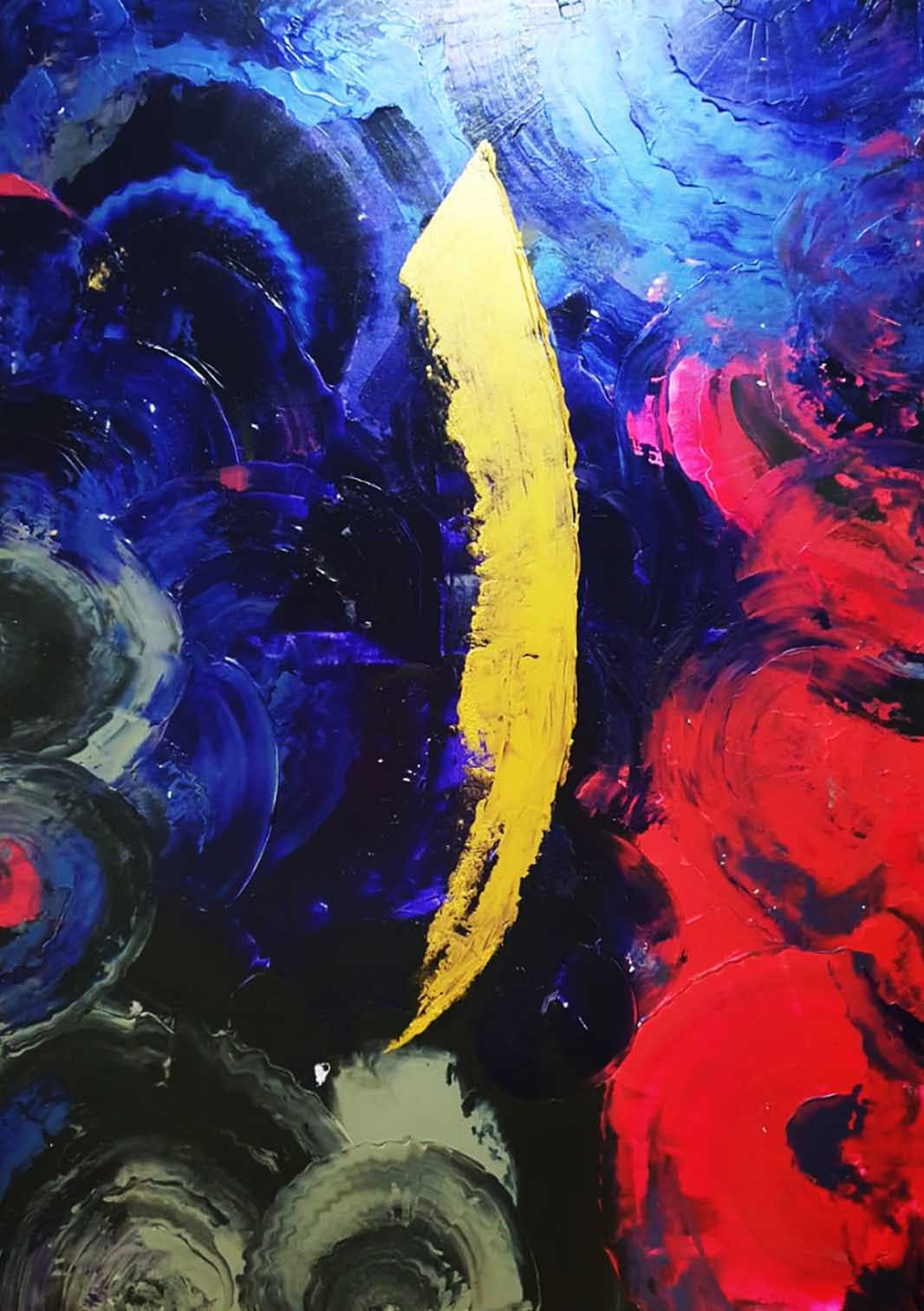
Through painting, I return to this question of belonging. A form occupies its own place, yet its presence changes the space around it. A line meets another line. An interval becomes significant because of what stands beside it. The whole emerges through these relationships.

Nature also complicates what I wish to believe. It contains damage, struggle and loss alongside growth and mutual dependence. Looking closely requires me to remain attentive to all of it.

Perhaps this is where my inquiry begins: with the willingness to recognise that I participate in the world I am trying to understand.

What I observe is also what sustains me.

The Calm — “A Place for Attention”

Dec 2023

I am interested in the kind of calm that allows us to notice more.

There are moments when looking becomes less hurried. The eye stays with a small variation in colour, a break in a line, a space that might otherwise have passed unnoticed. Nothing dramatic has happened. Yet the relationship with what is present has changed.

This is a quality I want to explore through my work.

Calm can hold complexity. A painting may carry many gestures, tensions and layers while offering the viewer a place to pause. I am drawn to that coexistence: the possibility that something intricate can be encountered without urgency.

When people describe feeling calm in the presence of my paintings, I receive that response with gratitude and curiosity. Each person brings a different history to the work. I cannot determine what they will feel, but I can remain attentive to the conditions the painting offers.

Does it allow the eye to move freely? Is there space to linger? Can a detail emerge gradually?

These questions connect the surface of a painting with a wider concern in my practice: how we make room for ourselves and for one another.

Attention requires room. It asks us to suspend, even briefly, the impulse to judge, explain or move on.

For me, calm begins to have meaning here. It becomes a capacity to remain present with something long enough for a relationship to form.

Patterns in Nature — “What Returns, What Changes”

Feb 2024

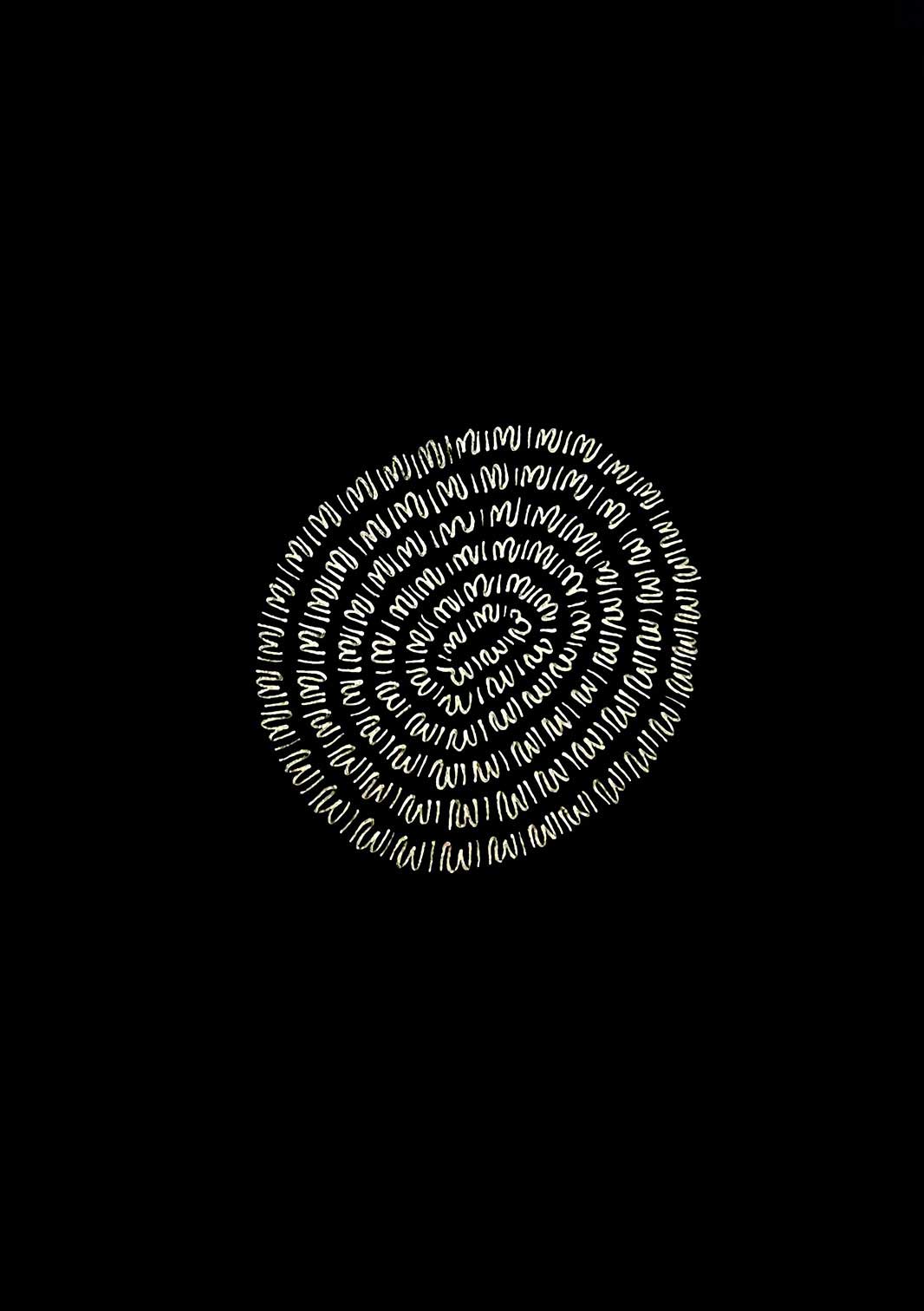
A branching tree, the veins of a leaf, the spiral of a shell, the ridges of a fingerprint.

I am drawn to the experience of recognising a form in another place. Something appears familiar, even as its scale, material and purpose change.

That recognition opens a question.

How can forms resemble one another while remaining entirely particular?

I do not assume that every resemblance carries the same explanation. A shell and a fingerprint have different histories of formation. Their visual proximity, however, gives me a way to think about the relationship between recurrence and difference.

This relationship matters within my paintings. A repeated element acquires meaning through its position, its surrounding space and its encounter with other elements. What returns is also changed by where it returns.

It is one reason patterns continue to hold my attention. They let me consider continuity without requiring sameness.

My interest in oneness develops through this distinction. I want to understand connection in a way that preserves the particular: the individual mark, the individual life, the detail that resists being absorbed into a general idea.

Looking at a pattern, I can follow the larger structure. Looking again, I begin to notice its variations.

Both ways of seeing are necessary.

Perhaps the work asks us to move between them: to recognise the whole, then return to what makes each part irreplaceable.

Difference Within Oneness

Jun 2024

There is a feeling I return to whenever I make art: that our differences belong within our connection.

I find it in the world around me. In the particular shape of a leaf, in the many forms that gather within a flower, in the distinct gestures of people moving through the same place. Each presence has its own character. Together, they create relationships that could not exist if everything were alike.

This is what I mean when I say, “We are all connected. We are all one.”

For me, oneness allows individuality to remain fully present. It asks us to consider how a life can be particular and still belong; how another person’s difference can expand our understanding rather than threaten it.

I often wish I could share the feeling behind this thought as directly as I experience it. There is a tenderness in recognising another being as part of the world to which we also belong. It changes the quality of attention. We become more curious about what we do not yet understand, more careful with what is vulnerable, more aware that our actions reach beyond ourselves.

My paintings emerge from this desire to make connection felt.

Within a work, each form acquires meaning through its relationships. A mark changes the space beside it. A recurring gesture holds its own variations. Colour can bring elements together while allowing their distinctions to remain visible. The painting becomes a place in which I can consider how many presences might coexist.

This also keeps my own conviction open to examination. It is easy to speak about unity when faced with something beautiful. The more demanding question is how that understanding holds when faced with discomfort, disagreement or unfamiliarity.

Can I remain attentive when recognition is difficult? Can I acknowledge a difference without immediately assigning it a lesser value? Can belonging include what I have not learned to understand?

These questions matter to the foundation of my practice. They bring the idea of connection into the way we look, respond and live.

I do not expect everyone to see a painting through precisely the same lens. Each viewer arrives with memories, beliefs and experiences that I cannot know. Yet I hope the work offers a moment in which the boundaries we take for granted become more open to questioning.

Perhaps someone will stay with a form they would usually overlook. Perhaps they will feel an unexpected familiarity. Perhaps a difference will become an invitation to look more closely.

That possibility is part of why I continue to make.

I want to create work in which individuality has room, relationship has presence, and belonging can be felt before it is fully explained.

The World That Enters the Work

Sep 2024

Inspiration can arrive from almost anything around me.

A tree at the gate. A small change in light. The arrangement within a flower. A conversation that remains in my thoughts.

Something familiar that suddenly asks to be seen again.

What draws me towards these encounters is often difficult to name. Before there is an idea for a painting, there is a feeling of significance. Something holds my attention, and I want to understand why.

That feeling is an important beginning within my practice.

I have come to recognise that inspiration involves a relationship between what I encounter and what I am able to notice. The world offers more than I can attend to at once. My questions, memories and inward state affect what comes forward.

Sometimes the smallest detail becomes the most expansive.

Looking into the centre of a flower, I can follow a recurring arrangement across its surface. My eye moves between the individual forms and the structure they create together. I become aware of how much remains to be seen within something I thought I already knew.

That movement between recognition and discovery feels close to painting.

The things that inspire me do not always appear as recognisable subjects in the finished work. A tree may leave behind a sense of branching or shelter. An encounter may become a question about closeness. A natural pattern may lead me towards repetition, variation or the relationship between a part and a whole.

The work carries what the encounter has set in motion.

There is also a spiritual dimension to this attention. My faith gives depth to the way I experience the visible world. Through Alif and the sacred name Allah, my practice returns to questions of origin, presence and the limits of what can be represented. An ordinary encounter can lead towards a question much larger than its immediate appearance.

I want to remain careful with that movement. The feeling an encounter creates in me is personal. It does not explain everything about the thing itself. A tree has an existence beyond the meanings I find in it. A flower continues its life beyond the pattern that captivates my eye.

Respecting that distance is part of looking.

It allows wonder to coexist with humility. I can be moved without claiming to understand completely. I can follow a connection while allowing some part of it to remain unknown.

This is why I keep looking around me. Familiar places continue to offer new questions. Something I pass every day can become a beginning when I give it sustained attention.

The world enters my work through these encounters. Painting gives me a way to stay with them, to follow what they awaken, and to discover what their presence may ask of me.

What Can Be Felt Before It Is Explained

Dec 2024

Some of the connections that matter most to me begin as feelings.

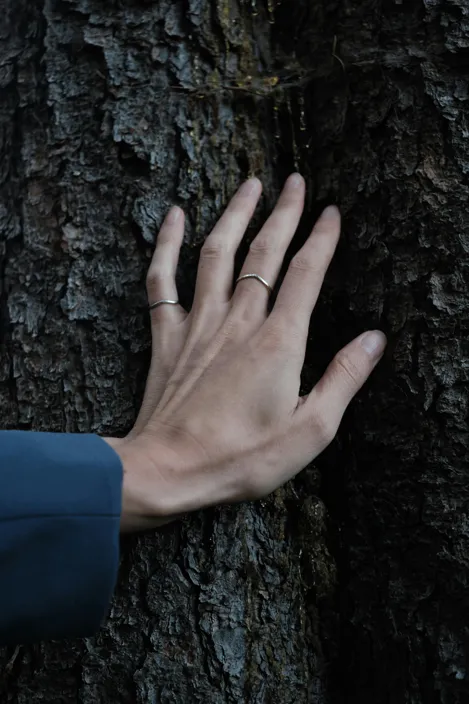
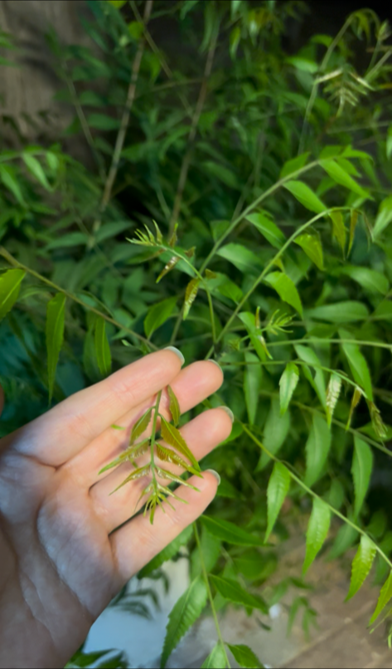
I experience this with the neem tree at my home gate. As I move closer, I feel drawn further into its presence. There is a sense of recognition that I cannot fully explain. The tree seems to invite a deeper attention, and I find myself wanting to remain with it.

I know this as my experience of the encounter. I cannot know what the tree experiences. Yet the feeling changes something real in the way I approach it: I look more carefully, move more gently, and become aware of its place within my daily life.

This distinction matters to me.

A feeling can be meaningful while its explanation remains incomplete. It can guide attention, create care and open a question. I want to give that kind of experience room within my practice.

Painting offers a place where it can develop without having to become a fixed statement too quickly.

A gesture may carry a sense of closeness. A recurring form may suggest continuity. The relationship between marks can create tension, ease or an unexpected recognition. These experiences emerge through looking. Their meaning may change as the viewer spends time with the work.

I am interested in that gradual encounter.

There is much in life that we recognise through its effects before we can describe it clearly. The importance of a person’s presence. The atmosphere of a familiar place. The way a particular colour changes our attention. Language can help us consider these experiences, but it may take time to find words that feel faithful to them.

My writing grows from this need to stay with what I feel.

It gives me a way to examine a connection: what belongs to observation, what belongs to memory, what comes from faith, and what remains uncertain.

Sometimes writing clarifies an idea. Sometimes it reveals that I have been using a familiar word for something I need to consider more closely.

The painting and the writing offer different forms of attention. Together, they allow the inquiry to continue.

I also hope this openness reaches the people who encounter my work. A viewer may feel something that I did not anticipate. Their experience can deepen the life of the painting without matching my own.

My wish to communicate connection therefore carries a responsibility to leave room. If I value the particularity of every being, I must also value the particularity of another person’s response.

The neem tree reminds me of this each time I approach it. Something draws me closer, yet closeness does not mean complete knowledge.

There is still more to notice. There is still a life beyond my understanding.

For now, I can remain attentive to the meeting, and to the care it brings into being.
Purpose Beyond Our Understanding

Apr 2025

I believe there is purpose in every form and every stage of existence.

This belief asks me to remain attentive to what I cannot immediately understand.

It is easy to recognise purpose when something offers a clear benefit. A tree gives shade. A vessel holds water. A path takes us somewhere. We can name what these things do and place their significance within our own needs.

But what happens when usefulness is less apparent?

A fragment. A faded surface. A moment that seems to lead nowhere. A form whose place in the world I cannot explain.

I am interested in the limits of my judgement. How much of what I call insignificant is simply something whose relationships I have not followed?

My practice allows me to stay with this question. A small mark may become important much later in the making of a painting.

An unresolved passage may influence the direction of the work. Something that initially seems incidental can reveal a relationship I could not have planned.

Its significance becomes apparent through time.

I want to remain careful with this belief. I cannot explain every loss or injustice as part of a purpose I claim to understand. The conviction that existence holds meaning calls me towards care; it does not release me from responding to suffering.

For me, purpose is closely connected with belonging.

Something may matter beyond what it provides to me. Its existence may contribute to relationships outside my knowledge. A life has value before I can describe its role.

This is an understanding I hope my work makes space for.

A viewer can encounter a form without knowing exactly what it represents. They can remain with its presence, notice its relationships and allow significance to emerge gradually.

I keep returning to the possibility that understanding follows attention.

Before deciding that something has no purpose, I want to ask whether I have looked long enough to recognise its place.

Why So Many Forms?

Jul 2025

Sometimes I look around me and wonder why existence holds such extraordinary variety.

Why so many colours? Why these shapes, these textures, these countless ways of occupying space?

Why does a leaf have this particular edge? Why does one flower gather its forms differently from another? Why do light and shadow keep changing something that seemed familiar a moment before?

These are questions of wonder within my practice. They begin in my experience of the world and lead towards my faith, my understanding of purpose and my desire to make.

I sometimes imagine an existence with one colour and one shape. Perhaps a single, immense blob.

Even that thought becomes a creative proposition. What colour would it be? Where would its shape begin or end? Would it have a surface? Would it change? What would it mean to encounter it?

Simplicity still contains decisions. The imagined absence of variety opens another field of possibilities.

This is part of what fascinates me about creativity: how readily possibility appears whenever I try to imagine its limits.

The abundance around us deepens my belief that distinction has a place within belonging. If I am moved by the particularity of a leaf, a stone or a flower, I must also examine how I respond to the particularity of another person.

Why should difference delight me in one encounter and make me defensive in another?

The question brings my wonder into the way I live.

Through painting, I explore how forms can retain their character while contributing to a larger experience. A composition allows variety to become relationship. Its coherence depends on how its differences are held.

For me, this is one reason life is art.

I experience the world through colour, form, movement, rhythm and continual change. Making art allows me to participate consciously in that experience: to respond, arrange, question and create.

The variety remains inexhaustible.

And the question “why?” keeps opening into another beginning.

The Detail and the Whole

Oct 2025

Details, details and details.

I can remain with a small part of something for a long time. An edge within an edge. A slight turn in a recurring form. A variation in colour so subtle that it becomes visible only after looking again.

Each detail changes my understanding of the whole.

From a distance, a surface may appear resolved. Closer, it begins to reveal its particularities. What seemed uniform contains variation. What seemed simple carries decisions, irregularities and traces of becoming.

I am drawn to this change in perception because it asks something of me. I must give up the comfort of believing that the first impression is sufficient.

Within my practice, detail is a form of inquiry. It allows me to examine how a larger experience is created through small relationships. A narrow interval can change the rhythm of a painting. A modest variation can keep repetition alive. One interruption can make an entire structure newly visible.

This attention also carries an ethical significance for me.

We often encounter people through broad categories before we encounter their particular lives. We recognise a group, a nationality, a belief or an appearance, and assume we know more than we do. Attention to detail asks us to stay beyond that first recognition.

What have I overlooked? What particular history is present here? What changes when I look more carefully?

I want to bring that patience into the experience of my work.

Yet closeness is only one part of seeing. A detail belongs within relationships that can disappear when the eye remains too near. I need to move between distances, allowing the particular and the whole to inform each other.

This movement keeps the inquiry open.

I look closely enough to discover difference, then step back to consider how it belongs. The painting changes through both encounters.

There is always another detail. The question is what kind of attention I am willing to give it.

Nothing Dies: On Changing Form

Feb 2026

I carry a belief that nothing truly dies.

Forms change. Presences leave our sight. What we could once touch becomes something we can no longer hold in the same way. Yet I understand existence as a continuity in which each form participates, even when its particular appearance comes to an end.

A fallen leaf brings this thought close.

There is a moment when it belongs to the branch, another when it moves through the air, another when it rests upon the ground. Its colour changes. Its structure loosens. Eventually, the shape by which I recognised it becomes difficult to distinguish.

I see a sequence of belonging within these changes.

This does not make loss simple. The particular form matters. We love a person, a place, a living presence through its distinct qualities. Transformation does not give us back the voice we miss or the encounter we wish could happen again.

My belief in continuity must leave room for that grief.

What draws me towards this question is the possibility that an ending may exceed what our perception can follow. We recognise the disappearance of a familiar form more easily than the relationships through which its presence continues.

Painting gives me a material way to consider this. A gesture may be covered, altered or absorbed into another layer. Its earlier appearance is gone, yet it has contributed to the surface that now exists. Later decisions have taken place in relation to it.

The history of the work remains active within its present form.

This understanding also changes how I think about purpose. I do not want to value a life, a material or a moment only at its most visible or celebrated stage. There may be significance in emergence, in change, in decline and in what follows.

I return to the thought that nothing is wasted within existence, even when I cannot perceive where its meaning leads.

Perhaps some part of my practice is an attempt to remain attentive at these thresholds: where recognition ends, and another form of relationship begins.

Everywhere, a Relationship

Sep 2026

I observe connections everywhere.

Sometimes they are visible: a branch meeting a trunk, a shadow following the shape that casts it, one colour changing the appearance of another. Sometimes they become apparent only when I stay with something long enough to notice what surrounds and sustains it.

The longer I look, the more difficult it becomes to think of anything as entirely alone.

Even an edge, which seems to separate one thing from another, is a place of contact. It tells us where two presences meet. The boundary gives each its particular form while also describing a relationship.

This thought accompanies my painting.

A mark may appear independent, yet its presence is shaped by the surface, the neighbouring marks, the light and the person looking. Move it slightly, and the relationships change. Leave more space around it, and it acquires another kind of significance.

I am interested in how connection can exist across distance. Two forms need not touch to affect each other. An interval can hold a relationship just as clearly as an intersection.

This gives me a way to consider belonging. We may live differently, speak differently and understand the world through different experiences, while still participating in relationships that extend beyond our immediate awareness.

Recognising those relationships carries a responsibility. If my existence reaches into the lives around me, then the way I occupy my place matters. Attention, care and even indifference have consequences beyond the moment in which they occur.

My work returns to this understanding through particular forms. I want to make room for the experience of noticing: the moment when something that appeared separate begins to reveal its relationships.

I find this moment endlessly compelling.

A leaf becomes more than a leaf when I consider its place on the branch. A mark becomes more than a mark when I attend to what it changes.

Everywhere I look, there is another relationship to follow.

Inquiring about

Your Name

Please enter your name.

Email Address

Please enter a valid email.
Back

Message

Please enter a message.
Back
Thank you! Your inquiry has been sent.
Something went wrong. Please try again.

Your Name

Please enter your name.

Phone Number

+1
Please enter a valid phone number (digits only).
Back

Email Address

Please enter a valid email.
Back

Preferred Completion & Delivery Date

Please select a preferred date.
Back

Preferred Artwork Size

Please enter a preferred size.
Back

Select Delivery And Location

Please enter a delivery location.
Back
Thank you! Your appointment request has been sent.
Something went wrong. Please try again.

Your Name

Please enter your name.

Email Address

Please enter a valid email.
Back

Message

Please enter a message.
Back
Thank you! Your message has been sent.
Something went wrong. Please try again.